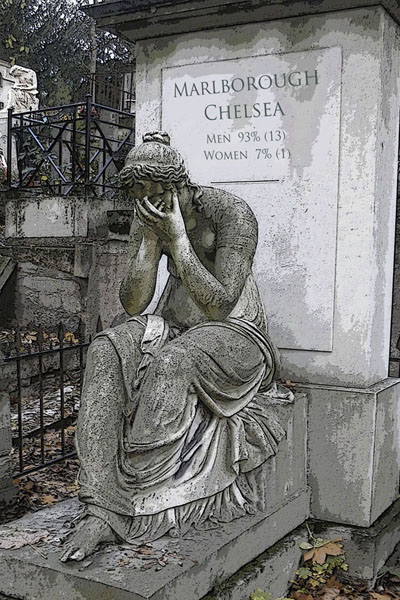
 F1
F1
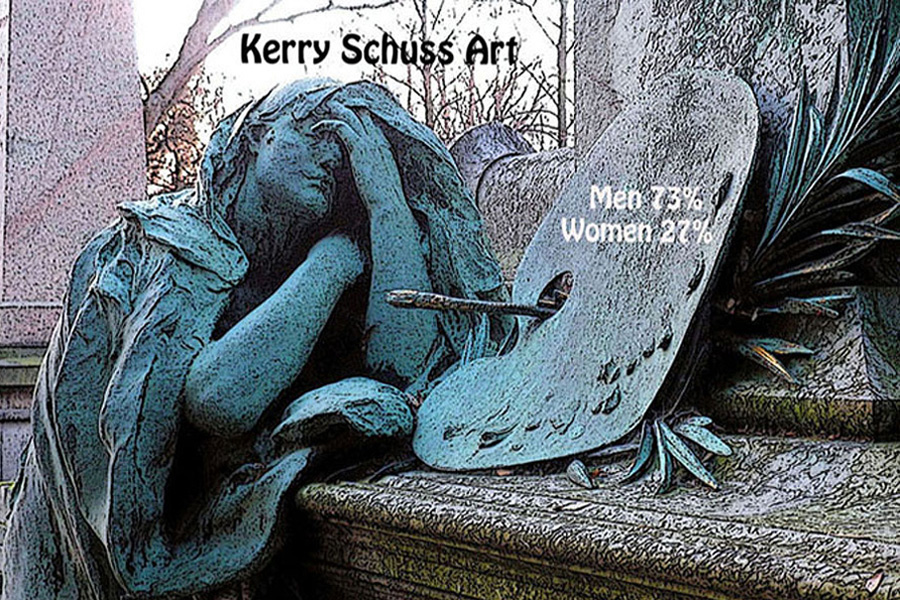 F2
F2
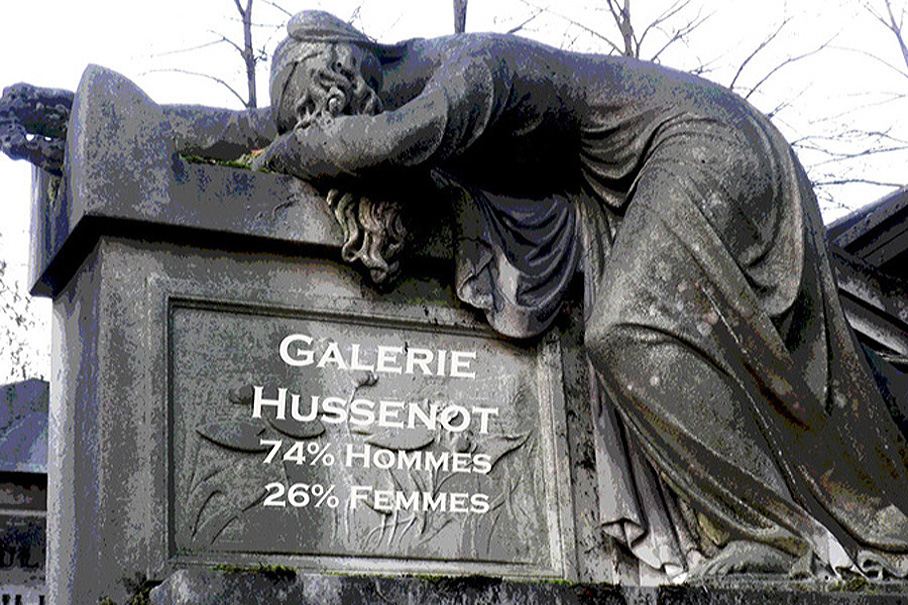 F3
F3
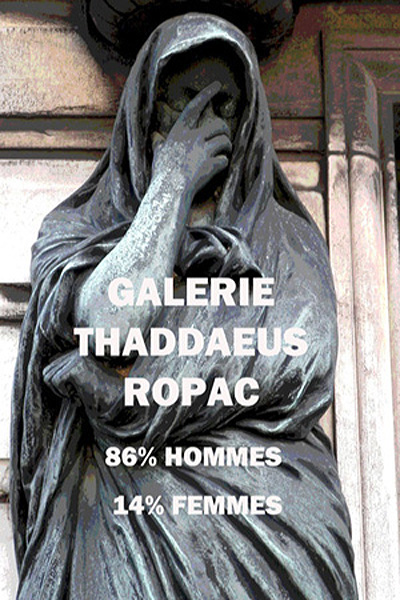 F4
F4
As part of Micol Hebron’s collaborative exhibition, “(En)Gendered(In)Equity: The Gallery Tally Poster Project” I was invited to create works illustrating the ratio of male to female artists in four galleries: two in New York and two in Paris. As a person who spent a good part of her career working with, many times, male artists, I was excited to be part of a show that speaks to gender parity. It afforded me the opportunity to examine how, when I was promoting women artists was I able to successfully increase their visibility in the marketplace, face any challenges, and how it affected my own creative expression.
In the Gallery Tally show, we cast a light on how far we still need to go. In creating the posters, I chose Marlborough Chelsea, a satellite of the Marlborough Gallery, one of the world’s leading artist reps. Not surprisingly, the Chelsea branch ranked among the most egregious examples of New York galleries when it came to gender inequity at 93% male and 7% female. Kerry Schuss Art, at 73% male and 27% female, was not as bad, though not great. The galleries in Paris reflected the same imbalance: Galerie Thaddaeus Ropac with 86% men and 14% women, and Galerie Hussenot with 74% men and 26% women.
The four female figures in my works (photos of 19th century sculptures from Père Lachaise Cemetery in Paris) are overwhelmed with exasperation in response to the tally for these dealers. I have been writing about and photographing Père Lachaise for more than 20 years. The tombs mark the final resting places of some of the world’s most beloved artists, including Eugène Delacroix, Rosa Bonheur, Marie Laurencin and Amedeo Modigliani. The female figure in funerary iconography is traditionally linked to the Seven Virtues: Faith, Hope, Charity, Temperance, Prudence, Fortitude and Justice. The images that I chose for the exhibition are powerful examples of how women embody some of the deepest qualities of the human condition.